The aerospace maintenance, repair, and overhaul (MRO) sector is navigating a period of unprecedented demand. Commercial fleets continue to expand, passenger traffic remains strong, and aircraft are staying in service longer than many operators originally anticipated. At the same time, aircraft delivery delays, supply chain constraints, and labor shortages are placing additional pressure on operators to maximize the availability of the assets they already have.
In this environment, aircraft availability has become one of the industry’s most valuable commodities. As a result, the conversation around MRO is changing. The challenge is no longer simply repairing a component. The challenge is returning aircraft to service quickly, efficiently, and with minimal disruption to operations.
This shift is redefining what customers expect from their maintenance partners.
The Cost of Downtime
Historically, maintenance organizations were measured primarily on their ability to inspect, repair, and overhaul components. Today, operators face a far more complex operating environment.
An aircraft-on-ground (AOG) event can cost airlines tens of thousands of dollars per hour. Delays impact schedules, crew availability, passenger experience, and revenue. At the same time, sourcing replacement assets has become increasingly difficult as supply chains continue to experience disruption, and lead times remain extended.
As a result, operators are looking beyond traditional repair services. They need partners capable of solving broader operational challenges, reducing downtime, extending asset life, and protecting fleet availability. In many cases, the fastest solution is not the repair itself. It may be access to an exchange asset, an alternative engineering solution, or a global support network capable of rapidly mobilizing resources wherever they are needed.
The focus has shifted from repairing components to restoring operational capability.
Why Engineering Expertise Matters
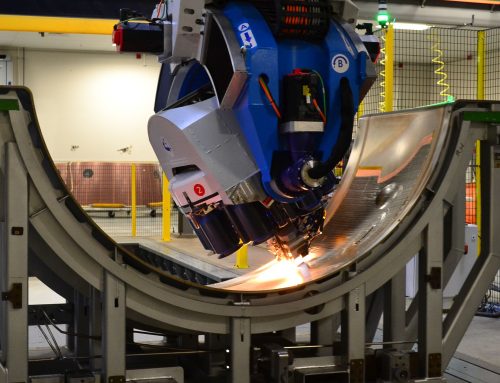
Modern nacelle systems are among the most sophisticated structures on an aircraft. They combine advanced composites, acoustic treatments, thermal protection systems, structural assemblies, and complex actuation mechanisms, all designed to exacting aerodynamic and safety standards.
Maintaining these systems requires more than repair capability alone. As aircraft technology continues to evolve, operators increasingly need support partners that understand not only how a component is repaired, but also how it was designed, manufactured, certified, and integrated into the aircraft.
When damage falls outside established repair procedures, engineering expertise becomes a critical differentiator.
The ability to develop new repair pathways, validate repair methods, work directly with OEMs, and recover assets that might otherwise be considered beyond economic repair can significantly reduce downtime and cost.
For operators under increasing pressure to keep fleets flying, that capability delivers measurable value.
Beyond Repair
At ST Engineering MRAS, maintenance is only one part of the solution. Backed by more than 95 years of aerospace heritage, MRAS combines OEM manufacturing expertise, engineering capability, advanced composite repair knowledge, and global support resources to help customers solve complex operational challenges.
Unlike many independent MRO providers, MRAS brings together capabilities across the entire nacelle lifecycle, from design and manufacturing through maintenance, repair, overhaul, technical support, and aftermarket services.
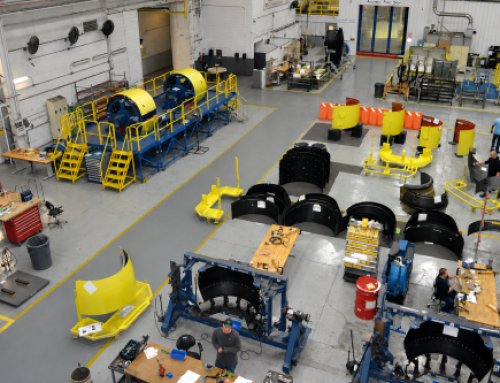
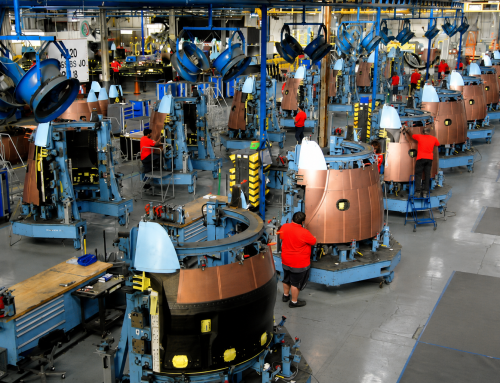
MRAS operates a state-of-the-art FAA and EASA-certified MRO facility and is an OEM-licensed MRO provider for Boeing 787 nacelle systems and Airbus A320neo LEAP-1A nacelles. The company also applies decades of experience in composite structures, bonded assemblies, and nacelle manufacturing to support customers throughout the operational life of their assets.
In many cases, MRAS supports products it manufactures, has manufactured, or has extensive OEM-level knowledge of. The company is the world’s only manufacturer of the A320neo LEAP-1A transcowl and the world’s only designer, manufacturer, and OEM for the CF6-80C2 and CF6-80E1 thrust reverser systems. This unique perspective enables MRAS to bring together design, manufacturing, and aftermarket expertise to support customers throughout the operational life of their assets.
Delivering Availability, Not Just Repairs
The true value of this approach is demonstrated when customers face challenges that have no established solution. Following severe transportation damage to a Boeing 787 Trent 1000 thrust reverser, one customer was left with an asset that had been rejected from the global rotables pool. With lease penalties continuing to accumulate and no proven repair pathway available, the customer needed more than a standard repair provider.
Working closely with the OEM, MRAS engineers validated repair data, modified tooling, and successfully completed the first thrust reverser rebuild of its kind. The outcome was not simply a repaired component. It was the recovery of a high-value asset, its return to the global rotables pool, and the elimination of significant financial exposure for the customer.
In another example, a major European airline experienced an AOG event involving a damaged Boeing 787 inlet in a remote Caribbean location. The challenge extended beyond the repair itself, requiring the coordination of exchange assets, global logistics, engineering expertise, and rapid technical support. By leveraging ST Engineering’s global network and MRAS’s nacelle expertise, the airline rapidly recovered the situation and returned the aircraft to service.
In both cases, the customer outcome was the same: aircraft availability.
Building Resilience Through Integrated Support
As the industry continues to face supply chain disruption and increasing maintenance demand, operators are seeking new ways to improve resilience. Rotable exchange and lease programs have become increasingly important tools for minimizing downtime and maintaining operational flexibility. Rather than waiting for damaged assets to be repaired, operators can quickly access serviceable components and keep aircraft flying while repairs are completed.
MRAS supports operators through extensive exchange and lease programs covering platforms including the Boeing 787, GEnx & T1000, Airbus A320neo, CF6-powered aircraft, and a range of commercial and military applications.
Combined with OEM-level repair capability, advanced composite expertise, and access to ST Engineering’s global support network, these services provide multiple pathways to maintaining aircraft availability when unexpected challenges arise.
The Future of MRO
The future of aerospace MRO will not be defined solely by maintenance activity. It will be defined by the ability to keep aircraft flying.
As fleets age, maintenance demand increases, and operational pressures continue to grow, customers will increasingly seek partners that combine engineering expertise, manufacturing knowledge, technical innovation, and global support capability.
The organizations that succeed will be those that solve problems beyond the repair itself.
At ST Engineering MRAS, that philosophy is simple; beyond repair lies the real objective: keeping aerospace moving. We know what it takes.