Introduction
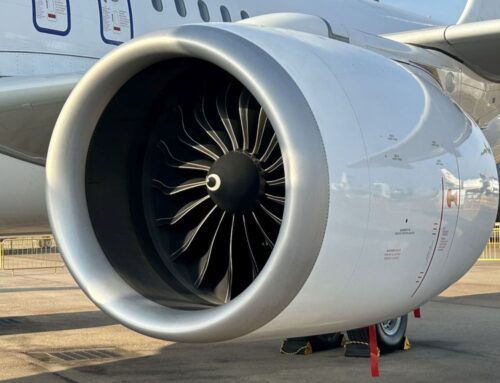
Modern aircraft propulsion systems bring together hundreds of individual components, systems, and interfaces, each of which must be carefully managed before an engine can be prepared for installation onto the aircraft.
ST Engineering MRAS combines engineering, supply chain management, kitting, manufacturing, and integration capability to help customers manage this complexity and create repeatable, production-ready propulsion solutions.
With established Engine Build-Up (EBU) experience across major aerospace programs, MRAS can support customer requirements at different levels, from individual systems and components to the coordination and integration of complex propulsion packages.
Managing Propulsion Complexity
Engine Build-Up involves far more than assembling components around an engine. A typical EBU can comprise hundreds of parts sourced across a complex supply chain, including ducts, valves, harnesses, tubes, hoses, brackets, and other systems required to connect the engine to the aircraft.
Each component must be procured, controlled, configured, and made available at the correct point in the production process. At program scale, this creates a significant coordination challenge.
For aircraft and engine manufacturers, effective propulsion integration therefore depends not only on engineering capability, but on the ability to manage the complete industrial process surrounding it.
ST Engineering MRAS brings these disciplines together, helping customers reduce complexity while maintaining visibility, configuration control, and production readiness.
The ST Engineering MRAS Approach
MRAS has developed extensive experience managing EBU and propulsion integration activities across established aerospace programs.
Its approach combines engineering knowledge with the industrial systems required to manage complex, repeatable production.
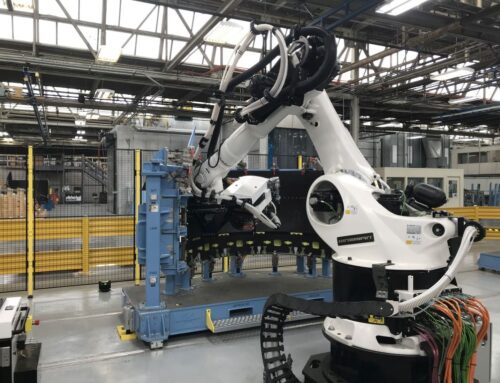
Components entering the facility are received, inspected, and controlled before being organized into structured kits for production. Materials and components are positioned to support efficient workflow, while defined production processes help ensure consistency as each propulsion package progresses through assembly.
This integrated approach brings together:
- Engineering and integration expertise.
- Procurement and supply chain management.
- Component and supplier coordination.
- Material control and kitting.
- Production planning and industrialization.
- Assembly and integration.
- Quality and configuration control.
- Preparation for shipment and onward aircraft integration.
By managing these activities as part of a coordinated process, MRAS can help customers simplify interfaces throughout the propulsion supply chain and establish production systems that support repeat demand.
From Components to a Production-Ready Package
The value of the approach is evident in MRAS’s established EBU production capability.
Hundreds of individual components from multiple sources are brought together through a carefully managed material flow. Components are organized into production kits, providing teams with the parts required at the appropriate stage of assembly while supporting traceability and repeatability.
The kits then progress into controlled assembly and integration, where individual systems and components are brought together around the engine.
The result is a complete, shipment-ready propulsion package produced through a structured process designed to support quality, efficiency, and repeatable production.
This capability enables MRAS to take responsibility for a complex integration activity that would otherwise require customers to coordinate multiple components, suppliers, and production interfaces themselves.
Flexible Support for Different Program Requirements
Not every aerospace program requires the same propulsion integration model.
Some customers may choose to retain responsibility for significant elements of propulsion integration internally. Others may seek an experienced partner capable of managing a broader package of engineering, supply chain, industrialization, and production activity.
MRAS can support different levels of integration according to the needs of the program.
Its capabilities extend across a range of EBU components and systems, supported by engineering, analysis, qualification, manufacturing, and supply chain expertise. This provides customers with the flexibility to determine where external integration can deliver the greatest value while retaining control of the activities they choose to manage internally.
Supporting Production Readiness and Scale
As aerospace programs move from development toward production, successful industrialization becomes increasingly important.
Production processes must be repeatable. Material must arrive when required. Configuration must be controlled. Suppliers must be coordinated. Quality must be maintained as rates increase.
By combining propulsion expertise with established aerospace manufacturing and supply chain capability, ST Engineering MRAS can help customers consider these requirements from the outset.
The objective is not simply to assemble an EBU, but to establish an industrial approach that can support the program as production requirements evolve.
For new and emerging aircraft programs in particular, this provides access to established propulsion integration experience without requiring that every capability, process, and supply chain interface be created internally.
Conclusion
Propulsion integration is ultimately about managing complexity.
From hundreds of individual components and multiple suppliers to controlled kitting, assembly, and final shipment, ST Engineering MRAS brings together the engineering and industrial capabilities required to transform a complex collection of systems into a production-ready propulsion package.
With the flexibility to support individual elements or broader integration requirements, MRAS can work alongside engine manufacturers, aircraft manufacturers, and emerging aerospace programs to develop an approach appropriate to their program.
By combining engineering expertise, supply chain coordination, industrialization, and proven production capability, ST Engineering MRAS helps customers move from propulsion requirements to repeatable production with greater confidence.
Find out more about our Engine Build Up (EBU).