At JEC World this month, ST Engineering MRAS played a leading role in shaping industry dialogue as sponsor of the aerospace forum, where a panel discussed “Composites in Aeronautics: Overcoming Barriers to Adoption in Next-Generation Aircraft.”
 Bringing together expertise from across OEMs, materials suppliers, manufacturing technology providers, and the wider supply chain, the discussion focused on one of the industry’s most pressing challenges: how to deliver the next generation of aircraft at unprecedented production rates while maintaining cost, quality, and performance.
Representing ST Engineering was Mitchell Smith, Vice President, Operations and Technology, who shared a clear perspective on what it will take to industrialize composite aircraft production at scale. Mitch was joined by conference chair, Marc Fette, CEO – CTC GmbH – an AIRBUS Company, and speakers Bertrand Germain, Vice-President Technical
Support Europe/Asia-Pacific/MEA – HEXCEL, Alexander Knorr, Chief Technology Officer – ELBE FLUGZEUGWERKE GMBH, Wilhelm Rupertsberger, Head of Competence Center Composite, and Ashley Tracey, Materials & Process Engineer – The Boeing Company.
From Innovation to Industrialization
 A central theme of the discussion was the gap between current composite capability and the production rates required for future single-aisle platforms, with targets of up to 80 to 100 aircraft per month per OEM.
Mitch positioned this as a fundamental shift for the industry. While composites have proven their value on programs such as the A350 and 787, the next challenge is no longer validation; it is industrialization at scale.
For ST Engineering, this means moving beyond isolated process improvements and focusing on how the entire production system evolves. Materials, design, manufacturing processes, and supply chain all need to align to enable repeatable, high-rate output.
Designing for Manufacturability at Rate
One key insight from Mitch’s contribution was the importance of early decision-making in shaping production outcomes.
As aerospace moves towards more integrated composite structures, decisions made at the design stage will directly determine how efficiently aircraft can be built. Unlike traditional metallic structures, composite systems require a far more holistic approach, where material behavior, processing routes, and tooling strategies are tightly coupled.
Mitch emphasised that the industry must avoid simply applying legacy thinking to new materials. Instead, next-generation aircraft must be designed with production rate, automation, and scalability in mind from day one.
The Role of Automation and Production Systems
 The panel highlighted the critical role of automation, digitization, and data integration in achieving high-rate manufacturing.
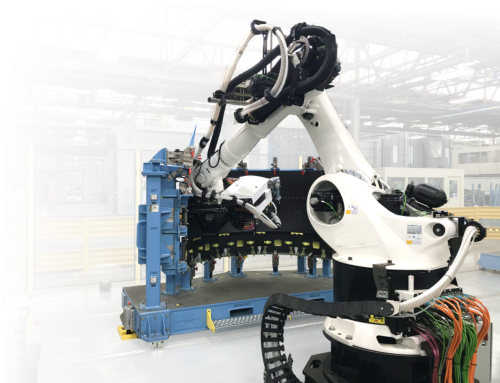
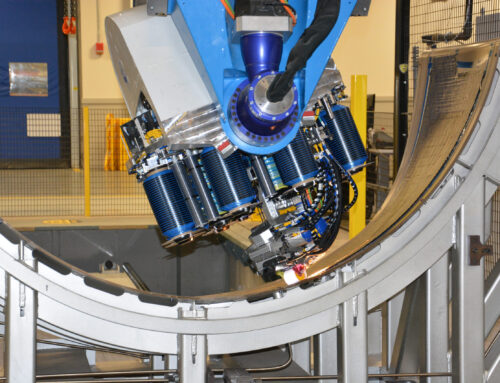
For ST Engineering, this closely aligns with the need to develop production environments that are not only automated but also data-driven and fully optimized across the process chain. From material preparation through to final assembly, the ability to capture, connect, and act on process data will be essential in reducing cycle times, improving consistency, and enabling real-time decision-making.
Mitch reinforced that achieving aerospace production rates closer to automotive levels will require a step change in how manufacturing systems are designed and operated. This includes higher equipment utilization, more integrated workflows, and greater reliance on advanced manufacturing technologies.
Balancing Cost, Rate, and Performance
A recurring challenge throughout the session was balancing cost reduction with increased production rates.
While material costs continue to decrease as volumes scale, Mitch acknowledged that the real opportunity lies in reducing cycle times and removing bottlenecks across the production process. Long cure cycles, inspection requirements, and fragmented manufacturing steps remain key constraints. Addressing these challenges will require coordinated progress across materials development, processing technologies, and manufacturing strategies, rather than isolated innovation in one area.
Collaboration Across the Value Chain
Another clear message from ST Engineering’s perspective was that no single part of the supply chain can solve this challenge on its own. High-rate composite manufacturing demands alignment between material suppliers, OEMs, Tier 1s, equipment manufacturers, and technology providers. Decisions around materials, processes, and production systems are deeply interconnected, and success will depend on how effectively the industry collaborates.
Mitch underlined that the transition to next-generation aircraft is not just a technical challenge, but a collective industrial effort that will define the future competitiveness of aerospace manufacturing.
A Defining Moment for Aerospace Manufacturing

The panel concluded with a strong sense of momentum. The industry has already demonstrated what composites can achieve. The next phase is about delivering those benefits at the scale and speed required for future programs.
For ST Engineering MRAS, the focus is clear: enabling high-volume, high-quality composite manufacturing through smarter design, advanced production systems, and closer collaboration across the value chain.
As Mitch concluded, the shift to next-generation aircraft represents a major transformation in how aerospace products are designed and built. The opportunity is significant, but so is the industry’s responsibility to come together and make it a reality.