Made in America. Mission Ready by Design.
Bringing a new defense technology to market is rarely limited by innovation. More often, the challenge lies in transforming a promising concept into a product that can be manufactured reliably, repeatedly, and at scale.
Whether developing advanced composite structures, autonomous systems, next-generation propulsion technologies, or high-performance aerostructures, many organizations face the same questions:
- How do we move efficiently from prototype to production?
- How do we maintain quality as output increases?
- How do we secure manufacturing capacity when demand grows?
- How do we prepare for certification, compliance, and long-term support?
These challenges are not unique to defense. They have been faced with these challenges across commercial aerospace for decades, where programs operate under demanding production schedules, strict certification requirements, and uncompromising quality standards.
At ST Engineering MRAS, we believe many lessons from high-rate aerospace manufacturing can help defense innovators reduce risk and accelerate their path to production.
Scaling Starts Earlier Than Most People Think
One of the most common challenges in aerospace manufacturing is that production readiness is often considered too late in the development process.
A design may perform exactly as intended, but if manufacturability has not been considered from the outset, programs can encounter delays when moving beyond prototype builds.
Tooling requirements, manufacturing methods, supply chain constraints, and production rates all influence how successfully a program scales.
In our experience, the most successful programs engage manufacturing expertise early, allowing design decisions to support both performance and production objectives.
This approach helps reduce redesign cycles, improve production efficiency, and minimize risk as programs mature.
The Importance of Production Discipline
As production volumes increase, maintaining consistency becomes just as important as achieving performance targets.
High-rate aerospace programs require repeatable processes, robust quality systems, and disciplined production planning. Small variations that may be manageable during development can become significant challenges when output increases.
This is where digital engineering, automation, and process control become valuable enablers.
Digital simulation tools help identify manufacturing challenges before production begins. Automated manufacturing technologies improve repeatability and quality. Digital traceability supports compliance and creates confidence throughout the production lifecycle.
Together, these capabilities help organizations scale production without compromising performance.
Lessons from High-Rate Aerospace Programs
Many of the manufacturing challenges emerging within defense today have already been addressed in commercial aerospace.
Programs such as the Airbus A320neo demand high-rate production, predictable delivery schedules, strict certification compliance, and fully integrated manufacturing systems.
Supporting these types of programs has enabled ST Engineering MRAS to develop proven approaches to automation, quality assurance, digital traceability, and production planning.
While defense programs often operate at different volumes, the underlying principles remain the same. Reliable production depends on repeatable processes, effective planning, and the ability to scale capacity when required.
Applying these lessons can help reduce risk and improve program readiness.
Building Manufacturing Readiness
For organizations developing advanced aerospace and defense technologies, manufacturing readiness extends beyond production equipment.
It requires access to the right facilities, infrastructure, expertise, and processes.
ST Engineering MRAS supports customers through capabilities including:
- Nearly 2 million square feet of manufacturing space.
- Extensive composite cleanroom facilities.
- Large-format manufacturing capability, including a 50 ft autoclave.
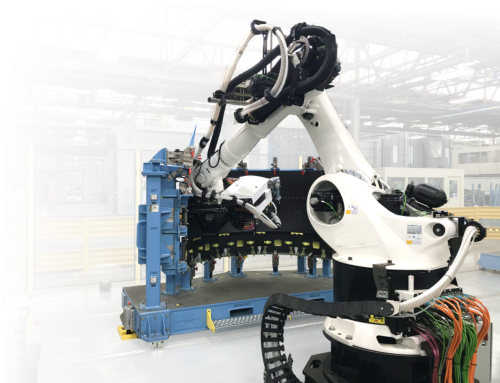
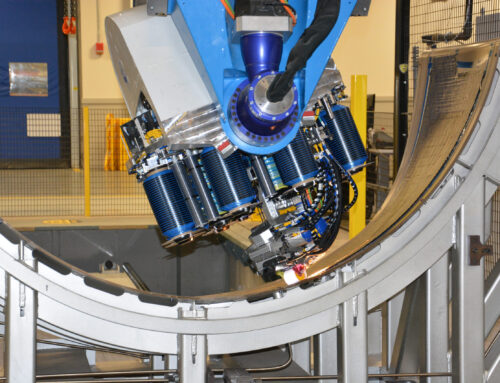
- Automated Fiber Placement (AFP) technology.
- Additive manufacturing for rapid tooling and development support.
- Digital engineering and manufacturing systems.
- Composite design, manufacturing, and certification expertise.
These capabilities enable programs to move more effectively from development to production while maintaining quality, compliance, and schedule performance.
Why Early Collaboration Matters
Many production challenges can be addressed long before manufacturing begins.
Early collaboration allows teams to evaluate manufacturability, identify potential bottlenecks, and align production strategies with program objectives.
It also helps organizations plan for critical requirements such as tooling, material availability, automation opportunities, and future production rates.
By addressing these considerations early, programs are often better positioned to scale efficiently when demand increases.
Looking Ahead
As aerospace and defense technologies continue to evolve, manufacturing readiness will become an increasingly important competitive advantage.
Emerging applications, from advanced composite structures to autonomous systems and next-generation propulsion technologies, will require organizations to scale efficiently while maintaining quality, compliance, and performance.
Every program is different, but the challenges associated with scaling advanced technologies are remarkably consistent.
By applying lessons learned from high-rate aerospace manufacturing, organizations can reduce risk, accelerate readiness, and build a stronger path from innovation to production.
For many innovators, the question is no longer whether a technology works. It is whether it can be delivered reliably at the scale required.